
Diving safety
How preparation, experience and context influence whether a skill is available when it matters.
Diving is practical. Good training can still ask scientific questions about what helps people act calmly and competently underwater.
How preparation, experience and context influence whether a skill is available when it matters.
What happens between theory, pool and real water, and why understanding alone does not create confident action.
Decisions, uncertainty, help-seeking and the human side of technical and safety-critical situations.
Published work, DOI and status are maintained centrally. Ongoing work is clearly labelled as such.
Steinhardt, S. C. & Ritter, L.
Wirtschaftsinformatik & Management
The article links technical learning environments with the question of when learners actually accept and use them meaningfully.
DOI →That is why it is not a detached academic corner here; it informs training design, feedback and decision practice.
Diving education still relies heavily on tradition. That is not a criticism; it is a research gap. Sven therefore looks at what actually happens between knowing a procedure and being able to use it when a situation becomes demanding.
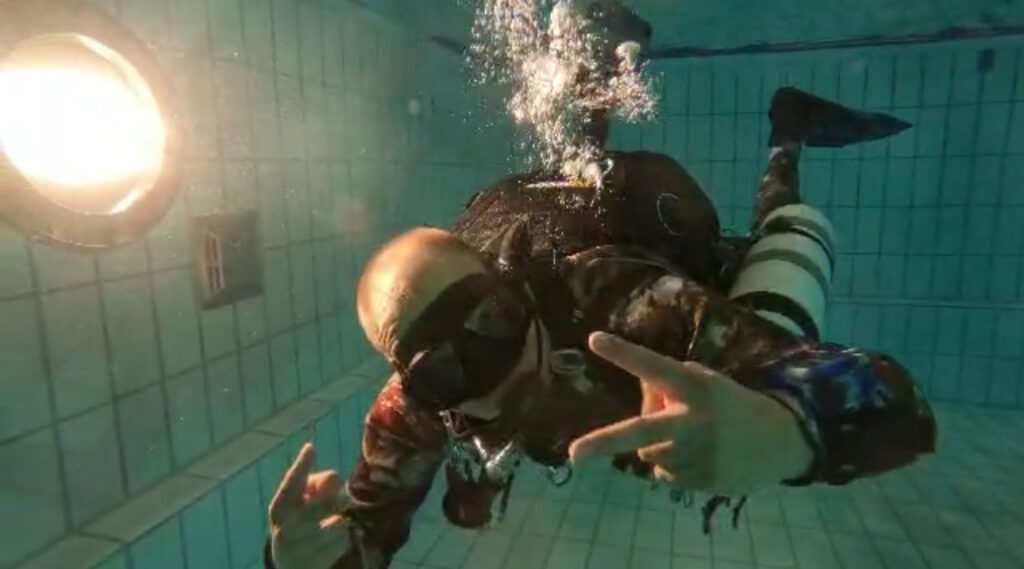
A quantitative study of how divers want to learn theory. 407 divers started the survey; 190 complete datasets were analysed.
Learning independently of time and place was the strongest driver of whether divers engaged with digital theory at all.
Recommendations from fellow divers influenced adoption more strongly than expert opinion. Diving is a social learning system.
Enjoyment alone did not measurably predict learning behaviour. Motivation does not replace structure.
190 participants from German-speaking countries are not a representative sample, and some scales were statistically weak. The study shows tendencies, not laws.
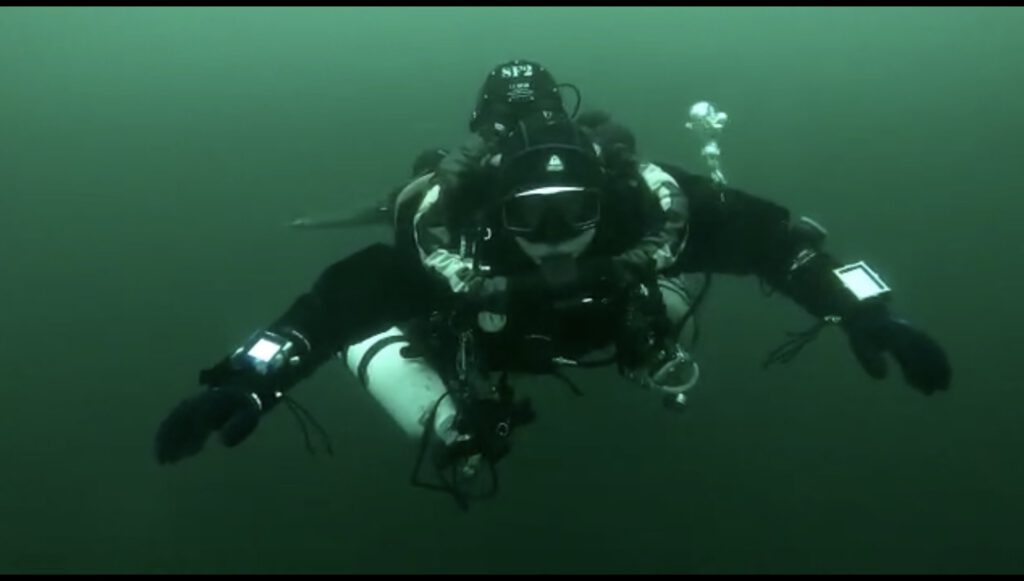
Fifteen certified divers reconstructed one critical incident each, from 25 to more than 2,000 logged dives.
Most knew the correct procedure. What became unstable was perception, breathing, communication or judgement.
Before panic came loss of orientation, faster breathing and tunnel attention.
A calm buddy could restore orientation and the ability to act; losing that reference could do the opposite.
Experience did not prevent symptoms, but it helped experienced divers stay mentally organised.
Debriefing and working through an incident shaped whether it became a better safety routine or lasting fear.
Three things follow, and they are the reason training here looks the way it does. Skills are revisited under realistic, manageable conditions instead of being ticked off once. The buddy is trained as an active part of your safety — proximity, eye contact, clear roles, and explicit permission to abort. And every demanding dive ends with a real debriefing, because that conversation decides whether the dive made you better or just older.
Background: MSc and MBA, doctoral candidate in business administration, lecturer and module author in vocational IT education, examiner for the German Chamber of Industry and Commerce, external thesis reviewer at two universities. More than 20 years of professional experience in technical education — the same question there as underwater: how does knowledge become reliable action?
Peer-reviewed publication: Steinhardt, S. C., & Ritter, L. (2026). Warum Virtual Labs pädagogische Akzeptanz brauchen! Wirtschaftsinformatik & Management (in German). doi.org/10.1365/s35764-026-00608-2
We use technically necessary storage for the website. Optional external media or statistics are only activated after your consent.
Your selection is stored locally for up to 180 days. Privacy policy